Watch our Asthma+Lung UK online event

Watch our Asthma+Lung UK online event

Thank you to everyone who came along to our online event with Nick Powell from Asthma+Lung UK on Friday 12 August.

Nick gave a presentation about the work of Asthma+Lung UK and the support available both nationally and locally for people living with asthma, COPD, mesothelioma and other lung conditions. There was also a chance to ask questions at the end.

If you didn’t get the chance to join the session you can watch the recording of the presentation below.

Sign up to our newsletter to be the first to hear about upcoming events.

Things I wish I had known before my loved one went to live in a care home

Things I wish I had known before my loved one went to live in a care home

Hearing feedback from relatives of those in care homes, we know that the process of moving into a care home can be a very isolating and upsetting time. There are many different emotional and practical aspects to consider.

Sometimes decisions and choices have to be made very quickly. Even when there is more time to plan, there can be smaller, unexpected issues that arise and make you think ‘I wish I had known this before my loved one went to live in a care home’.

This list was put together by people who attended our care homes forums in 2021 and 2022. It is a simple list of things to think about and comes from their experiences of having a loved one living in a care home.

There will be other things which we have not thought of and if you have more ideas and tips, please let us know and we will add them in.

Things to do

  • Provide more socks than you think will be needed – with recognisable patterns
  • Provide slippers – two pairs at least
  • Keep a supply of clothes at your home to top up/replace items as needed
  • Label everything – clothes and other items – with your loved one’s name. They may change rooms but not their name!
    – iron in labels for clothes and shoes in addition to the home’s own labelling
    – use indelible marker to write name or room number on TV remotes and ornaments
  • Check if you can you use your own bed linen and/or curtains
  • Ask if you can move in small items of furniture. A small side table that sits against a wall gives a nice focal point for ‘knick knacks’ without taking up space
  • Think about things that brighten a room immediately – pictures, trinkets, lamps, throws, cushions, but nothing too valuable or fragile in case of breakages/loss
  • Put a favourite picture of your loved one when they were younger in a prominent place
  • Buy a spare remote control for the TV
  • Think about a small Christmas tree and decorations. Ask family and friends to send cards directly to the person in the home so they feel part of the celebrations.
  • Supply games, picture books etc. to help with visits
  • Take scented drawer liners which add a nice touch to a room

Things to know

  • Labelling is very important but things will disappear, move around the home and reappear – both in and out of your loved ones room
  • Remember to say hello to other residents – you are in their home
  • Care home tea is usually very milky!
  • Care homes can be very warm – wear layers
  • Are meal times protected – is visiting not allowed at this time or can you visit to help your loved one eat?
  • Find out the arrangements for Christmas – are you able to visit or take your loved one out of the home?
  • Leaving your coat and handbag in the car or in the manager’s office, so that you can slip out, can make leaving after a visit less stressful for you and your loved one.
  • Does the home arrange ‘virtual’ visits – who does them and how is your loved one supported to interact with the call?
  • It might be reassuring to ask what a ‘typical day’ looks like for your loved one
  • Visiting can be upsetting so it can be an idea to have someone to talk to afterwards or have a relaxing activity planned

Get in touch

If you’d like to speak to us about your experiences of care homes, care home visiting, information about care homes in Northumberland, or would like to know more about our forums, please get in touch.


Download the list as a PDF

Your Care, Your Way – what you said

Your Care, Your Way – what you said

Healthwatch England has published new findings, which show services are failing in their legal duty to provide accessible information for people with physical and learning disabilities.

As part of the Your Care, Your Way campaign, between March and May 2022, an online survey was carried out which heard from 605 people affected by communications challenges.

People being refused communication support

One in four respondents (28%) – including deaf, blind and people with learning disabilities – said they had been refused help when requesting support to understand information about their healthcare. This included information being provided in formats such as Braille, British Sign Language and Easy Read.

Not being given information in the right format affected people’s mental health and wellbeing (38%), meant they missed out on important information about their health (29%) or meant that they could not contact a service they needed (27%).

Respondents also reported that the quality of communication from NHS and social care services had worsened over the last two years. Two-thirds (67%) felt that the way health and care services communicate with them had gotten worse or slightly worse over the course of the pandemic.

Impact on people who have mental health conditions

It is not just people with sensory impairments or learning disabilities who are affected by this issue.

A fifth (22%) of those who reached out to Healthwatch to share their experiences identified themselves as having a mental health condition, such as depression or anxiety.

Of these people, 35% reported they rarely or never get the support they need to understand healthcare information or communicate with staff. The majority of them (70%) also said that the lack of information in a format they could understand further impacted their mental health and wellbeing.

Why we need better Accessible Information Standard

The findings come as NHS England (NHSE) is conducting a review of the Accessible Information Standard (AIS). The Government created this legal requirement in 2016 to ensure all publicly funded health and social care providers meet the information and communication needs of people who are deaf, blind or have a learning disability. Publication of this review is expected later in the year, with updates to be implemented by April 2023.

Earlier this year, Healthwatch England uncovered that many health and social care providers significantly failed their duty to ask about people’s communication needs and then act on this information.

They joined forces with leading disability organisations, including RNIB, RNID, Mencap and SignHealth, to inform the long-awaited review of the AIS. The coalition called on NHSE to take on board their recommendations, including stronger accountability across services to protect people’s rights to accessible information.

Louise Ansari, national director at Healthwatch England said:

“Our findings are a stark reminder that some of the most vulnerable people in our society are still excluded from access to healthcare because they communicate in British Sign Language or they need information in visual formats. And this is despite the fact that their rights to accessible information are protected in law.

“People’s right to accessible information should be based on their communication needs, not just on a diagnosed disability. For instance, people who have a mental health condition or are waiting for a diagnosis should have a right to request communication support in the same way as people who have a sensory loss or a learning disability.

“If people cannot get information about their healthcare they understand, this can have a significant impact on their mental health and can lead to them missing doctor’s appointments or taking the wrong medication, putting them in danger.

“As we are waiting for the review of the Accessible Information Standard, we strongly advise that NHSE and the newly created 42 integrated care systems ensure equitable access to healthcare for everyone.”

Find out more about the results of the accessible information survey

Get in touch

If you would like to tell us about your experience of accessing health and social care services in the last 12 months please get in touch.

Online Event – Asthma+Lung UK

Online Event – Asthma+Lung UK

Join us on Friday 12 August, 1pm-2pm to hear a presentation from Nick Powell from Asthma+Lung UK.

In this free, online public event Nick will provide a brief overview of asthma, COPD, mesothelioma and other lung conditions.

We will also hear about the national and local support available from Asthma+Lung UK. There will be a chance to ask questions.

Register now and we will send you a link to join closer to the event: 


This event has now passed.

Mental health services and autistic children

Mental health services and autistic children

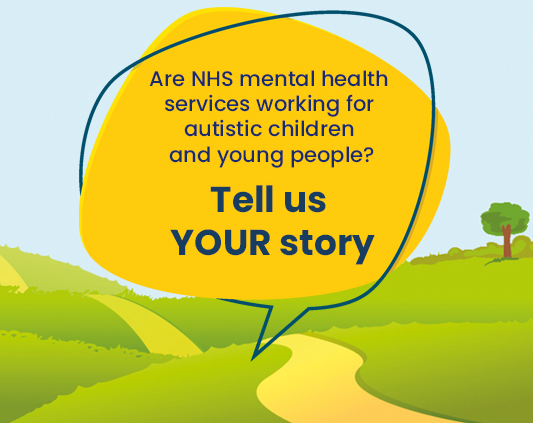
Are NHS mental health services working for autistic children and young people?

We have been hearing from local families that some NHS mental health services aren’t working for them. To understand what is happening, we would like to hear about the experiences of as many autistic children and young people as we can. This includes children with a formal autism diagnosis, currently being assessed, or where there is an indication of autism. We want to know what is working well and what could be better.

Please tell us about your family’s experiences online, or by getting in touch in a way that suits you.

What you tell us will be included in a report to those who pay for and provide these services, along with recommendations of how services could be improved for children and young people. It will be anonymous and we will ensure you cannot be identified.

Read what Sarah, Ellie and Jennifer have to say and then tell us your story…

Parent Sarah says “For both of my children it took several years to get a diagnosis of ADHD and autism. Both have had issues with their mental health alongside their ADHD and autism. The delay in diagnosis impacted negatively on their mental health and both also experienced additional deterioration after Covid-19.

“Many different health and care services have been involved with my children, but these services are unfortunately not all joined up. Often referrals would be accepted for support but then discharged on the basis that other services were already involved or were better suited to provide support, care or treatment. When support has been received this is time-limited or specific to concerns at any one time leading to the process of needing to fight to seek help again later down the line.

“My children’s mental health difficulties have been seen as being ‘part of their autism’ rather than a separate condition that required treatment and help. This has led to difficulties and challenges getting the right support and most appropriate services involved for their mental health. Many people on the autistic spectrum have anxiety and mental health issues. This is not autism but the effect of having to adjust to the world around them and the many challenging situations they face.

“What has been most difficult is that every step of the way I have had to fight to get the right support my children need, challenging what we have previously been told and doing a lot of research ourselves. At times we felt we were not being listened to. It feels like we have had to become specialists in our own right, whilst also caring for children with additional needs that can be very challenging.”

Young person Ellie told us “The mental health professional I saw at the NHS didn’t seem to know very much about autism, so they didn’t realise that the appointments themselves were very stressful for me. I don’t think they always believed me when I said how bad I was feeling because on the surface I appeared to be okay.

“My mental distress at the time was extremely high and I was experiencing some very dark thoughts, but I didn’t feel listened to or understood. I would have liked to have had someone like my dad with me at the appointments but that wasn’t an option because they were held at school.

“My mental health has slowly improved since then but that’s because I started seeing someone privately who has experience of working with autistic people. I feel very lucky about this because I know not everyone would be able to afford it.”

Jennifer, whose child is autistic, says “The initial relief of my child being provided mental health support was quickly replaced by concern, as instead of getting better they got worse. A lack of knowledge and understanding about autistic presentation meant the therapist didn’t connect authentically with my child, who in turn felt invalidated by the whole experience.

“The number of sessions offered was limited and at the end of the programme I was shocked to find my child didn’t reach the threshold for further support. Instead, we were provided with a list of community-based support organisations and left to fend for ourselves. As a parent I now have a complete lack of confidence and trust in the NHS mental health system.”

Tell us YOUR story

Whether your child may be autistic, is currently being assessed or has a formal autism diagnosis, we’d like to hear their experiences of mental health services. We’d like to know what went well and what could have been better. Tell us your story online, or if you’d prefer to speak to one of our friendly team in confidence, please get in touch.

This piece of work has now closed.

Annual Report 2021/22

Annual Report 2021/22

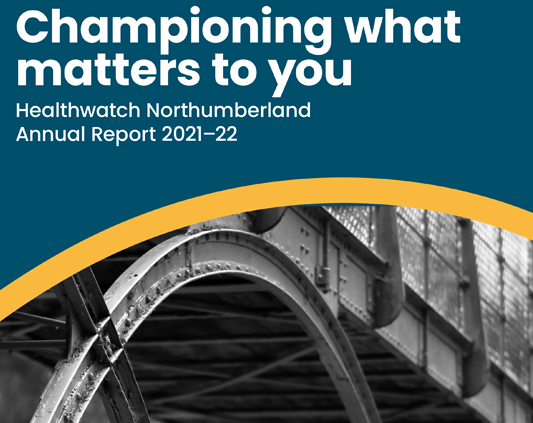
Championing what matters to you


Our Annual Report 2021/22 gives an overview of our work over the year. Filled with local photographs from all four corners of the county, the report highlights how we made a difference to people in Northumberland who use health and social care services.

You told us about your experiences of local pharmacies, home care, dentistry and GP services, helping providers know what matters to you and ensuring your views are included in plans for these services. Our Signposting and Information Service enabled over 3000 people to find out more about support and services in our area, and you can find examples of how the service provided confidential support and information.

View the Healthwatch Northumberland Annual Report 2021/22

or download a pdf version.


Tell us about the NHS and social care service you and your family have used recently.

Home care services in Northumberland

Home care services in Northumberland

Home care services are a vital way to support people by meeting their health and social care needs in their own homes.

‘Understanding the experiences of people using home care services, then, now and in the future’ was a project designed to find out the experiences of people using services and their family carers in Northumberland. We wanted to find out what is working well for people and also make recommendations for changes or improvements to services, based on what people told us.

This is particularly important at present given the disproportionate impact of the COVID-19 pandemic on those using home care services and their families, and the need to prepare for similar situations in the future.

We also wanted to follow up and extend on our previous work which focused specifically on the Coquet Valley, by gathering the views of people throughout Northumberland. Read Home Care Provision in Coquetdale.

This report is an overview of the findings and draws out key recommendations on the issues raised by those who use services and their carers. We have indicated where the recommendations are for Northumberland County Council Adults Social Care commissioners (ASC) or service providers (SP).

Read our findings and recommendations below:

Home care services in Northumberland

Brockwell Surgery relocation

Brockwell Surgery relocation

Earlier this year we helped Brockwell Medical Group to hear from patients their thoughts on the proposal to relocate Brockwell surgery to a new build located on the site of the Northumbria Specialist Emergency Care Hospital. We held three online forums during February and March 2022 for patients and residents.

Pauline Ironside, Business Lead from Valens Medical Partnership and Dr Aamir Munir from the surgery were at the sessions to provide an overview of the proposal and answer any questions. Jen Coe from Northumberland Clinical Commissioning Group Engagement also attended and Shari Kelly from Valens Medical Partnership joined us for one of the online sessions.

Feedback on the proposed relocation

In total eight people came to the forums and all were patients of Brockwell Surgery. We also received some feedback via social media, email and telephone. A summary of the areas of feedback we recieved are outlined below.

Read detailed questions and answers from the forums in Appendix A.

1. Travel to the new surgery

One of the primary concerns we heard was around travelling to the new site for appointments, particularly as public transport did not appear to be readily available and taxis would be expensive. Concerns tended to be for elderly people or others who may be unable to drive. One person mentioned her elderly parents could rely on her for lifts, but others would not necessarily have that same family network. Another person said that she was currently unable to drive due to a health issue and would struggle to get to the new site.

There was a general feeling that the current surgery was a ‘community’ facility serving its patient location and demographic well and that a move would detract from that. A query was raised about whether a postcode analysis of current patients had been completed. Two people mentioned that the current site was walking distance for them. However, we also heard from one person that the new proposed site was closer to travel to and a suggestion that this would also be the case for others.

Related travel concerns and questions are outlined below:

  • Alternative options to proposed move

 There was some acceptance about the need for improved premises and services, but a question was raised by two people about whether expansion on the current site was possible as an alternative and another two people about whether the current surgery could be kept open as a ‘branch’ surgery alongside the new proposed site.

  • Environmental and cost implications

 Due to the observation that most patients would likely have to travel further to access the new site a concern was raised at one forum and via social media about the environmental impact of people having to drive to appointments who are usually able to walk. Alongside the concern about taxis being expensive for those who cannot drive, the costs of public transport for those who could use it to get to the new site and increased petrol costs for those driving to the new site were also raised.

  • Alternative transport options

There was general support for the proposal of a free transport solution in partnership with Age UK Northumberland. We heard that this would not only be for the elderly community but also younger patients who were struggling with transport to the new site. However, there was a concern raised about ensuring the transport available was safe and accessible for frail elderly people who may not be able to step up into a mini-bus or be safely seated before it moved away. One person told us that her autistic son who is also non-verbal potentially may struggle with this type of transport solution.

There was also a concern that any transport solution should be sustainable, and a query was raised as to how this would be and continue to be funded in the future particularly given Age UK’s charitable status.

2. Parking concerns

 Another primary concern raised in relation to the new site was around parking. Several queries were raised about whether this would be free parking and there were concerns around how parking would be managed at the new site and if hospital patients would be prevented from using it.  We did however, also receive feedback from someone at a forum and another via social media about the difficulties parking at the current site and how the new site could improve parking concerns.

Other considerations

The engagement process

There was some concern raised about the engagement process itself following unexpected delays in patient letters being received. However, it is noted that some more online sessions were arranged and the survey date extended due to this delay.

Concerns were raised about ensuring the voices of those who may be digitally excluded, whose first language is not English, and those with protected characteristics were heard as part of the engagement process. We also had a suggestion from one person that the survey appeared biased in favour of the proposal, and another was concerned that the proposal was like a move proposed several years ago and therefore felt contributions made from patients as part of that process should also be considered. A few people were keen to understand whether the proposal was a ‘done deal’ regardless of patient views.

Miscellaneous

We received a couple of comments that the move appeared more beneficial to staff than to patients and a related query about whether there were financial incentives for medical partners for the move.

We also heard a query around pharmacy services and whether these would remain at the current site or move to the new site, showing a potential concern about disruption to services.

Summary

The feedback we received about the proposed relocation centered mainly around two key issues which were travel to the site, particularly for those who do not drive, and concerns about parking. Due to these concerns people were keen to know if other options closer to the current site had been considered or whether some provision could also remain at the current site should the move go ahead.

Recommendations

  • Ensure continued meaningful engagement on the proposal if approved. For example, develop and deliver a communications plan with patient representatives that provides regular updates to all patients, highlights when key milestones are reached/achieved and identifies when and how feedback will be sought on key issues.
  • Given the queries received about whether the current site could instead be expanded, further information should be included in the FAQs about the reasons that this is not possible, to improve transparency and patient confidence in the process.
  • Whilst alternatives to travel to the site for those who do not drive are being considered, these options need to be both transparent and viable and communicated fully to patients to help alleviate concerns. Information about available bus routes should ideally be published or at least be offered to affected patients prior to any agreement on the proposal to allow for further feedback. At a minimum this could be via a Traveline ‘plan your journey’ link on the website.  A travel impact assessment focusing on those with protected characteristics under the Equality Act should be completed, including an Environmental Impact Assessment.
  • Should the proposal go ahead, parking solutions at the new site should be fully and clearly communicated to visiting patients.
  • Given potential difficulties in travel, further consideration should be given to how multiple frequent surgery visits within one day would be managed, for example, stool and urine sampling cases.


June 2022: Brockwell Surgery relocation approved

The Brockwell Surgery relocation has now been approved. The practice was given the final approval at NHS Northumberland Clinical Commissioning Group’s Primary Care Commissioning Committee held in May 2022. You can read more about the move at Valens Medical Partnership’s website.

 

Diabetes Week – 13-19 June 2022

Diabetes Week – 13-19 June 2022

Diabetes Week 2022 is coming up from 13 to 19 June. It’s a chance to raise awareness of diabetes and highlight the support available to anyone living with the condition. If you would like to find out more about diabetes and the support available in Northumberland, come along to our free online event on Friday 10 June to hear from Colin Renshaw of Diabetes UK.

Colin will provide information about the different types of diabetes and how to manage and live well with the condition. We will also hear about national and local support available from Diabetes UK and there will be a chance to ask questions.

Here at Healthwatch Northumberland, two members of our volunteer team have experience of type 2 diabetes and have kindly shared their thoughts below.

James’ Poem

Our volunteer James wrote a poem about his experience of type 2 diabetes:

Got diabetes
From eating too many sweeties
Didn’t care what I ate
Always cleared my plate

What symptoms did I have?
Lots of trips to the lav
Drank like a fish
Even made a wish

Was first given tablets
But didn’t change my habits
Drinking too much coca colas
Along the way I am rotting my molars

Moved on to the hard stuff
Needle is in
Needle is out
Whoops am going to shout

Sugars is o so high
Sugars is o so low
How is going to go
Or maybe it’s going to snow

Have now changed my diet
I can’t really be quiet
How low can I go
Getting a healthier glow

Colin’s Q&A

Volunteer Colin answered some questions for us about his experience of type 2 diabetes and how this affects his daily life:

When were you first diagnosed with diabetes?

22 years ago.

What symptoms did you have?

I didn’t have any symptoms, it was picked up during a routine eye examination following sight loss (unrelated).

How did it affect your life?

The main thing is that I have to check my blood twice a day.

How have you managed the condition? What healthcare support did you get? Did you get help from any support organisations?

My diabetes was initially treated with Metformin tablets and I had an annual check with a diabetes nurse. After a period of time I needed insulin to manage my sugar levels and I attended a course on how to use insulin at Blyth Hospital. I continue to have yearly check-ups with a diabetes nurse – these were online during pandemic but are back to in person now.

What is the situation now – how is the condition and have you made any lifestyle changes to improve it?

I have to have meals at regular times and carry something with me to eat. If things get out of balance, I can have a ‘hypo’ (experience hypoglycaemia) but I’m good at spotting the signs.


Find out more about diabetes at the Diabetes UK website.

If you would like to tell us about your experience of diabetes services or ask a question about local services and support, please get in touch.

Online Event – Diabetes UK

Online Event – Diabetes UK

Join us in the run up to Diabetes Week 2022 to hear from Colin Renshaw from Diabetes UK on Friday 10 June, 1pm-2pm.

In this free, online public event Colin will provide information about the different types of diabetes and how to manage and live well with the condition. We will also hear about national and local support available from Diabetes UK. There will be a chance to ask questions.

Register now and we will send you a link to join closer to the event: 

If you would like to tell us about your recent experience of diabetes services please get in touch.