Getting out and about

Getting out and about

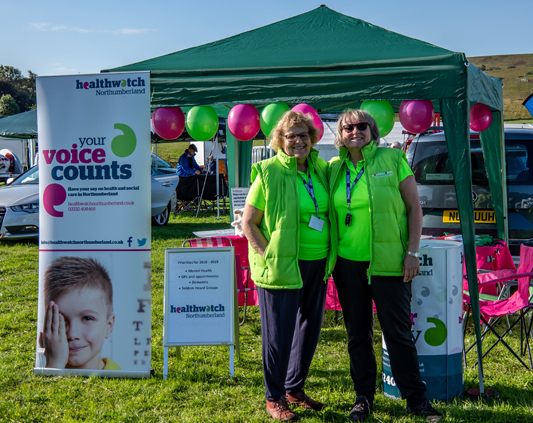
We’re making plans to get back out in local communities as soon as it is safe to do so this summer. Our role as independent champion for people who use NHS and social care services involves listening to people from all over the county about their views and experiences of using services such as GPs, dentists, hospitals, mental health services, care homes, pharmacies and NHS 111.

We have done this in lots of ways during the pandemic but speaking directly to people in communities across Northumberland is a big part of what we do. We are now planning how we can get back on the road when government guidelines allow.

Can you tell us how you would feel about us coming along to a venue near you – outside – by answering a few questions? Your feedback will help us make decisions about we work this summer. Thank you.


Getting back on the road

Part of our role here at Healthwatch Northumberland is getting out and about to communities across the county, to hear people's views and experiences of using NHS and social care services.

Please wait...
Healthwatch Northumberland walks

Healthwatch Northumberland walks

Kooth Q&A

Kooth Q&A

Providing information about local health and care services is part of the core work of Healthwatch Northumberland, and mental health services for children and young people is one of our key priorities.

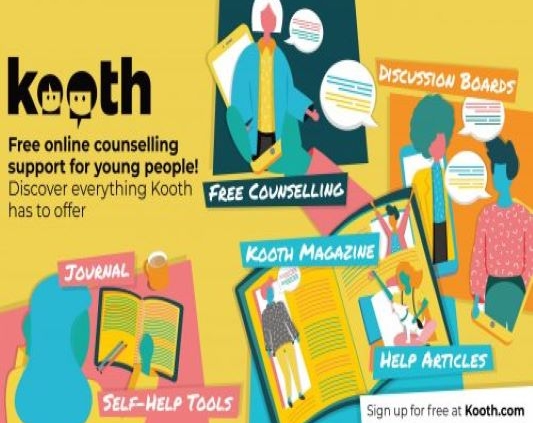
In June 2020 NHS Northumberland Clinical Commissioning Group (CCG) commissioned Kooth, a free online mental health support service for young people aged 11-25 years.

Watch this video to find out more.

We were therefore delighted to host an online seminar on 10 March 2021 with Malcolm Connelly, Engagement Lead at Kooth who told us about how the service works and how parents, carers and professionals can signpost young people to it.

Below are the questions from the audience and Malcolm’s answers which include links to the Kooth site and how to contact Malcolm for more information.

If you or a young person you know have used Kooth, we would like to hear about your experience. Share your feedback with us.

Q&A

How can parents check the suitability of Kooth?

There are demos available to see what the site looks like from a user’s perspective however the content will look different depending on the age of the child. A demo can be arranged by emailing Malcolm Connelly (mconnelly@kooth.com). There is also information on the Kooth website and Malcolm has put together a parents’ information letter.

Kooth follows strict safeguarding guidelines and young people will only speak to trained counsellors when using the platform. Any discussion is via pre-moderated threads.

How can I get resources to share to promote Kooth?

If you work for an organisation which supports children and young people, get in touch with Malcolm to add your details to his database of contacts. There are also A4 posters and wallet size cards available. Visit the Kooth Promotion Hub to find resources to promote Kooth.

Do you promote Kooth to schools and youth groups?

Yes, Malcolm does presentations in schools and for youth groups although it is more difficult at the moment with restrictions. Malcolm is currently only able to offer virtual presentations but is hoping to get back into schools later in the year.

What does Kooth mean?

During initial discussions about what to call the platform, a group of young people took the word ‘uncouth’ and flipped it to the more positive ‘Kooth’.

What is the adult equivalent of Kooth?

Qwell. This is currently only available to teachers and support staff in Northumberland.

Is there any data to show the positive impact that Kooth is having on young people and what are the recurring themes?

Monthly and quarterly reports are sent to the CCG which commissions Kooth, however these have to be requested and authorised for anyone else who would like to see them.

Is there any reason for Kooth starting at 11 years old?

This age was agreed with the CCG and is relevant as it is the start of secondary school. Around the age of 11 or 12 children are old enough to understand more and benefit from the support service. Gillick competency is assessed (more details here).

Is Kooth safe for autistic people?

Kooth is a safe space but we understand some young people may struggle with the text-based service and are constantly working to make Kooth fully accessible for all.

You mentioned face-to-face interventions. How does that work?

This is not currently available in the North East.

Are you getting into schools at the moment with the current restrictions?

Yes, but not as much as usual. Malcolm is hoping to get back into schools regularly by September.


Find out more about the support available for children and young people in Northumberland.

Is NHS 111 First making a difference?

Is NHS 111 First making a difference?

From 1 December 2020, the NHS has introduced a new system called NHS 111 First. This means that NHS 111 can now book you an appointment at your local A&E or get you an urgent appointment at an alternative health service. The NHS 111 First campaign encourages people to call NHS 111 before going to emergency departments.

During COVID-19, people have relied on NHS 111 more than ever to get urgent medical advice. Healthwatch England’s latest research looks at people’s experiences of NHS 111 and awareness of the new A&E time slot booking service.

Find out more about NHS 111 First

To better understand public attitudes towards NHS 111, including awareness of the new services offered by NHS 111 First, and support the best possible roll-out of this new service, Healthwatch England commissioned YouGov to run a UK representative online poll of 2076 adults (18+) between 27 – 28 January 2021.

Through the Healthwatch network, the views of over 400 people who had used NHS 111 in the last six months were also recorded.

  • The majority (84%) of polling respondents said that they were aware that they could call NHS 111 for urgent medical advice. Almost three-quarters (70%) agreed that they were more likely to call NHS 111 than go straight to an emergency department when they had an urgent medical problem.
  • More than three out of four people who had used the service and got through to an advisor (79%) felt they had got the help they needed.
  • Almost three quarters (72%) of those that have used the service agreed that they generally had positive experiences when they called NHS 111​, while 12% disagreed and 13% were neutral.
  • Not feeling confident in the advice given by NHS 111 call handlers was a common issue. Only 55% of all polling respondents said they felt confident that when they phoned the service, the person they spoke to would be qualified to help them.
  • Those who did use NHS 111 First and had a timeslot booked for them at A&E were highly likely to rate their experience as very good, suggesting that that the new system is working when people are given the option.
  • However, awareness of the new service is low. 80% of polling respondents were not aware that NHS 111 could reserve timeslots at GPs and 73% were not aware they could reserve timeslots at A&E.

Read the full report


Care home visits: public forum

Care home visits: public forum

At our online forums recently we have heard how visiting restrictions in care homes have affected people living there and their relatives. We have also heard about people’s experiences of other ways of keeping in touch during Covid-19. From 8 March those who live in care homes will be able to receive one regular designated visitor.  We want to hear from you about your experience of this change, and what would help as restrictions are gradually eased.

We are holding another online forum on 31 March from 2.00 – 3.30pm where Dr Jim Brown, Consultant in Public Health at Northumberland County Council and Alan Curry, Senior Manager – Commissioning Northumberland County Council, will be there to answer your questions on the visiting guidance for care homes from a public health and county council perspective and what we may expect for care home visits in Northumberland as we move on from Covid-19.

If you would like to register for a space please contact helenb@healthwatchnorthumberland.co.uk or call us on 03332 408468.

If you cannot come along but have a question you would like an answer to, send it to us and we will ask it for you.

You can also tell us about how you’ve kept in touch with relatives in care homes here

More on care home visits guidance as of 8 March

What you told us: October to December 2020

What you told us: October to December 2020

As the independent champion for people who use health and social care services, Healthwatch Northumberland is a listening organisation working across Northumberland, interested in what people think is working well in services and what can be improved. We act on what people are saying, sharing their views with those who have the power to make change happen. We also help people find the information they need about services in their area and record this as ‘signposting’.

People who use health and social care services tell us about their experiences throughout the year. This report shares a summary of the feedback collected from October to December 2020. During this period, we have continued to work in different ways due to the continuation of the Covid-19 pandemic. The next report will cover January to March 2021.

This quarter we received feedback and enquiries from:

• Telephone calls, emails, website and social media (73%)
• Talking to people at online engagement events (25%)
• Through a third party (2%)

Areas of Focus
We are open to all feedback about health and social care services. Responses to our 2020 Annual Survey helped us to identify a specific Areas of Focus which we are prioritising in 2020/21; this includes mental health services, dementia and GP services. Covid-19 has meant changes have been made to health and social care services. Patients and carers’ experiences and signposting requirements are likely to have been different during this time. For this reason, we have also chosen to focus on any feedback we receive which is related to covid19 and these changes.


Read the October to December 2020 Report

Online event – mental wellbeing support for young people

Online event – mental wellbeing support for young people

Are you a parent, carer or someone who is looking for initial support for a child or young person’s mental wellbeing? Perhaps you work with young people and want ideas about what mental health support is available in Northumberland? Come along to our online event on Wednesday 10 March from 10.30am to 11.30am and find out more about Kooth, an online counselling and support service available to all young people aged 11-25 across Northumberland.

Kooth is a safe, confidential and anonymous way for young people to access wellbeing and mental health support through self-help resources and articles, peer support and discussion, and access to fully trained and qualified counsellors until 10pm each night, 365 days per year.

This event is an opportunity to hear more about Kooth from Northumberland’s Kooth Engagement Lead Malcolm Connelly who will give a short presentation and introduction to the service, what it involves, how to access it and what you can expect. There will be a Q&A session following the presentation.

Find out more about Kooth here.

Children’s Mental Health Week took place this year from 1 to 7 February, an opportunity to shine a spotlight on children and young people’s mental health. We supported this campaign and are currently running a survey to get feedback from young people about their experiences of mental health services. However, we understand that the work does not stop with the end of this campaign and many young people will continue to need mental health support during these difficult times and beyond.

Preliminary results from our survey show that many young people do not seek formal support for their mental wellbeing and will instead rely on family and friends, but it is important that people are aware that there are local services available that can provide support and that they know how to access them.

If you would like to come along to the event please contact Helen Brown at: helenb@healthwatchnorthumberland.co.uk, or call 03332 408468 to register.

We would also like to hear from young people who are using or have used children’s mental health services in Northumberland so we can understand what is working well and what could be improved. You can share your views here.

Parents, carers and relatives of young people who have used services can also share feedback on our website.


Do you use Day Services?

Do you use Day Services?

Do you or someone you care for use Day Services in Northumberland?

Day Services in Northumberland are being reviewed to see what they need to provide to meet the needs, expectations, and aspirations of current and future service users. There has been a reducing number of older people attending Day Services in Northumberland over the past few years resulting in services closing due to lack of demand. This has been exacerbated by the Covid-19 pandemic with most of the Day Services being closed for the past 11 months.  Additionally, current Day Services for younger adults with learning disabilities and/or mental health conditions are being reviewed to see if they provide what is needed to enhance people’s lives and support independence.

If you, or someone you care for use Day Services, what has the impact been for you of these services not running for almost a year now? Have you been able to use the service in a different way, for example, online? If and when day services can be provided again, would you like them to run the same as before the pandemic or with some online provision? What do you think the issues and barriers would be to running services differently?

Please let us know your views and whether you would be willing to take part in conversations around day services in the future.

Get in touch

This piece of work is now closed.

NHS Clinical Research project

NHS Clinical Research project

Can you help the NHS to improve services and treatments for patients?

We are working with NHS England to undertake some research on what patients, current users, non-users and those with specific health issues including cancer, diabetes, heart disease, mental health and genetic factors, think about getting involved with clinical research.

This research will be really valuable in helping the NHS develop new medicines and learn more about better health and care for the future.

We want to know how patients and the public feel about clinical research, how they can get involved in research, what digital access they might need and if there are any barriers in place for involvement.

The survey will run up until Friday 12 February 2021.

Take the survey

This survey is now closed.

Mental health and young people

Mental health and young people

Time to Talk day takes place in February each year, a day which encourages the nation to get talking about mental health. One in four adults and one in eight young people will experience a mental health problem in any given year, which is why talking about mental health is so important. This year’s event might look a little different, but at times like this open conversations about mental health are more important than ever. A small conversation about mental health has the power to make a big difference.

In addition, Children’s Mental Health Week takes place 1 to 7 February and is an opportunity to shine a spotlight on children and young people’s mental health. We are supporting both campaigns and would love to hear from you about your experiences of health and social care in relation to mental health services. Whether you currently use or have used these services directly, or are a carer for someone who currently uses or has used these services, we would love to hear your feedback.

We would like to hear from young people aged 13 – 25 years, so that we can understand what is working well and what could be improved in mental health services. What you tell us could help make these services better for everyone in Northumberland.

Share your experiences of using mental health services

Mental Health Support